How often do dogs go into heat? Heat cycle stages, length and signs
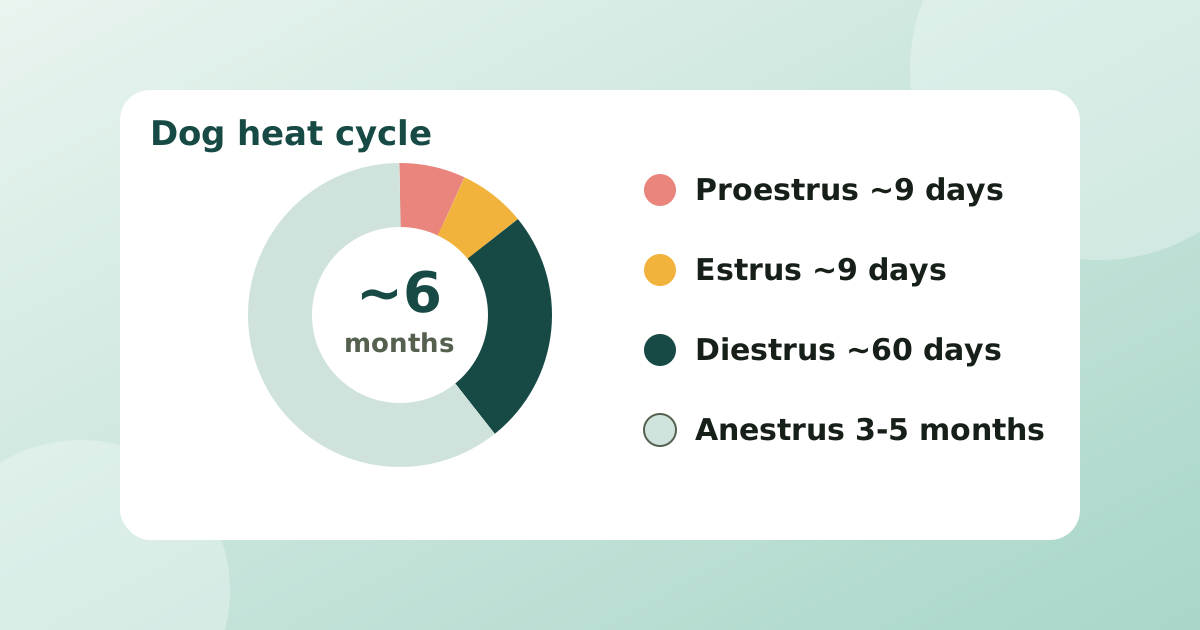
Most dogs go into heat about every 6 months, and the visible heat lasts around 3 weeks. A full cycle has four stages: proestrus, estrus, diestrus and anestrus. Only estrus is fertile, and the length of every stage varies from one bitch to another, so the best predictor of her next heat is her own record, not a breed average.
The four stages of the dog heat cycle
Stage
Typical length
What you see
Fertile?
Proestrus
about 9 days (3 to 17)
Swollen vulva, bloody discharge, males interested, she refuses them
No
Estrus
about 9 days (3 to 21)
Discharge turns lighter or straw-coloured, she accepts the male, tail held to the side (flagging)
Yes
Diestrus
about 60 days
Vulva returns to normal, she refuses males, pregnant or not her hormones stay high
No
Anestrus
about 3 to 5 months
Resting phase, no signs
No
These are typical ranges from veterinary reproduction references. Individual dogs differ, so use them as a guide and check anything unusual with your vet.
How long is a dog in heat?
When people say a dog is "in heat" they mean proestrus plus estrus, the days with visible signs. That averages about 18 days and commonly runs from 2 to 4 weeks. Bleeding is heaviest in the first half and often fades as she moves into estrus, but a colour change is not a reliable sign of ovulation. That is why breeders test progesterone rather than rely on the discharge. See our guide to progesterone timing for dog breeding.
How often do dogs go into heat?
The gap between the start of one heat and the start of the next is normally about 6 months, though the range is wide:
Small breeds: often every 4 to 6 months, and some cycle three times a year.
Medium breeds: usually close to 6 months.
Large and giant breeds: every 8 to 12 months, sometimes longer.
Basenji and a few other breeds: once a year, usually in autumn.
The long gap is mostly anestrus. The length of that resting phase is what changes between dogs, and it can also shift as she ages.
First heat: what to expect
The first heat usually arrives between 6 and 12 months in small breeds and between 12 and 24 months in large and giant breeds. The first cycles are often irregular, light or easy to miss, and the second heat can come after a shorter or a longer gap than you expect. Many vets and breed clubs advise not breeding on the first heat, and waiting until at least the second or third.
How to predict the next heat
Record day 1. Write down the first day you see bleeding for every heat.
Work out the gap. Count the days between each start date and the next one.
Take the average. The more heats you have logged, the better the prediction.
Add it to the last start date. That gives the window for the next heat. Start watching a week or two before it.
Counting from the end of the heat instead of the first day of bleeding.
Assuming every heat is the same length. Cycles can shorten or stretch with age and health.
Breeding by the calendar. Ovulation can fall anywhere from about day 5 to day 20, so test progesterone.
Not logging a quiet or "silent" heat, which breaks the pattern for the next prediction.
Ignoring warning signs. Heavy bleeding that continues past a few weeks, a smelly discharge, or a bitch who is drinking a lot and lethargic in the weeks after a heat needs a vet visit the same day.
Keep the dates in one place
Sire & Dam is a dog breeding app that logs each heat, learns the average interval between heats and predicts the next one, with a reminder before it is due. It also tracks progesterone, the mating, the whelping countdown and puppy weights, works offline and keeps your records on your phone. More guides are in our dog breeding section.
Frequently asked questions
How often do dogs go into heat?
Most dogs come into heat about every 6 months, so twice a year. Small breeds can cycle every 4 to 6 months, large and giant breeds every 8 to 12 months or more, and some breeds such as the Basenji cycle only once a year.
How long does a dog stay in heat?
The visible heat (proestrus plus estrus) usually lasts about 2 to 4 weeks, with an average of roughly 18 days. Proestrus averages about 9 days and estrus about 9 days, but both vary from one bitch to the next.
When is a dog fertile during her heat?
She is fertile in estrus, which starts after the bloody proestrus phase. Ovulation can fall anywhere from about day 5 to day 20 of the heat, so progesterone testing is more reliable than counting days.
At what age is a dog's first heat?
Usually between 6 and 12 months in small breeds and 12 to 24 months in large and giant breeds. The first cycles are often irregular, so do not worry about the exact interval at first.
How can I predict my dog's next heat?
Write down the first day of bleeding for every heat, then work out the average gap between them. Add that average to the last start date to get the next expected heat. The free dog heat cycle calculator or the Sire & Dam app does this for you.
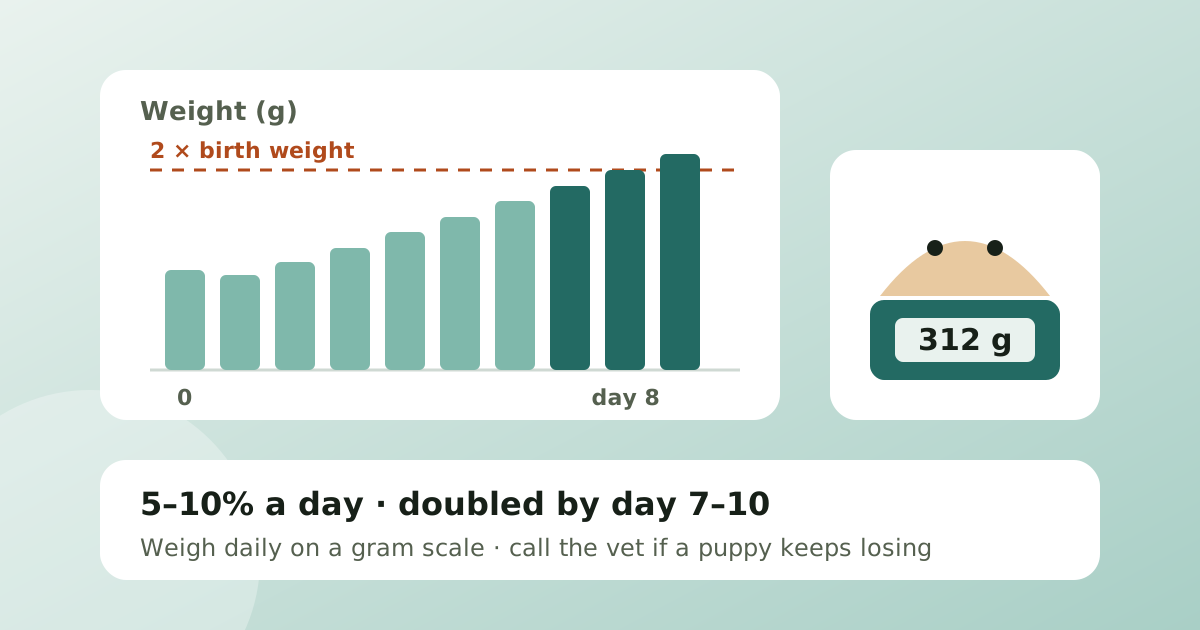
Healthy newborn puppies gain roughly 5 to 10% of their body weight every day and double their birth weight within 7 to 10 days. Weigh them daily and the scale warns you before anything else does.
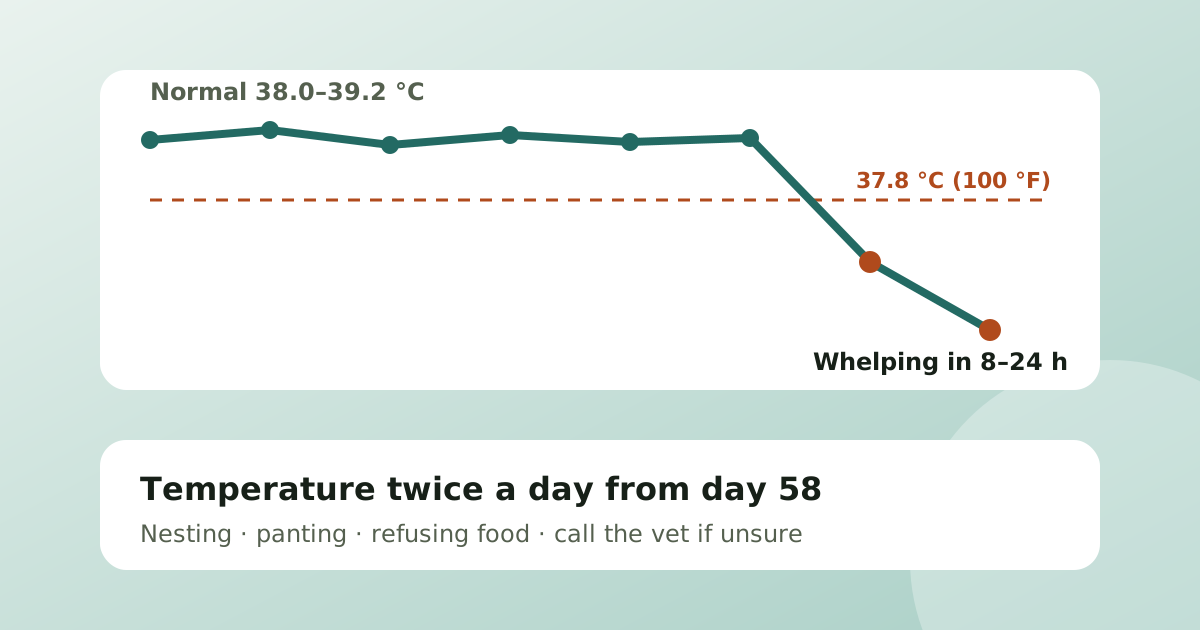
A bitch's temperature usually drops from about 38.5 °C to below 37.8 °C (100 °F) 8 to 24 hours before she whelps. Take it twice a day from day 58 after ovulation and watch for nesting.
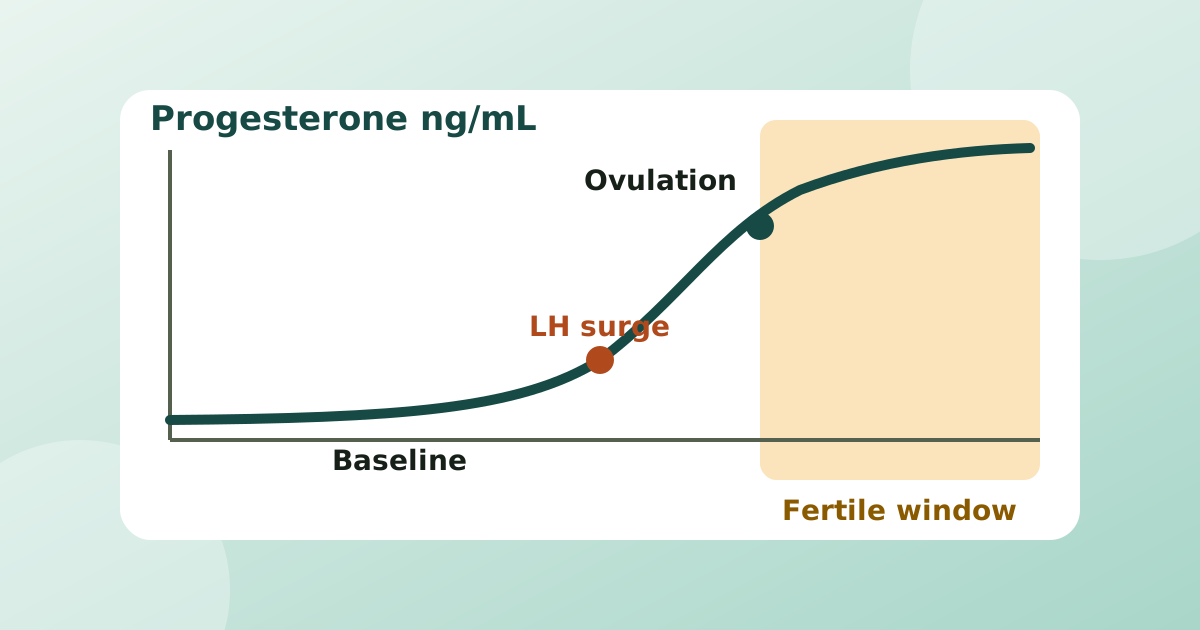
Progesterone rises from under 1 ng/mL to about 5 ng/mL at ovulation. Test every one to two days and you can pin down the fertile days instead of guessing from the calendar.