How much can I spend per day? Work out a daily budget in 5 steps
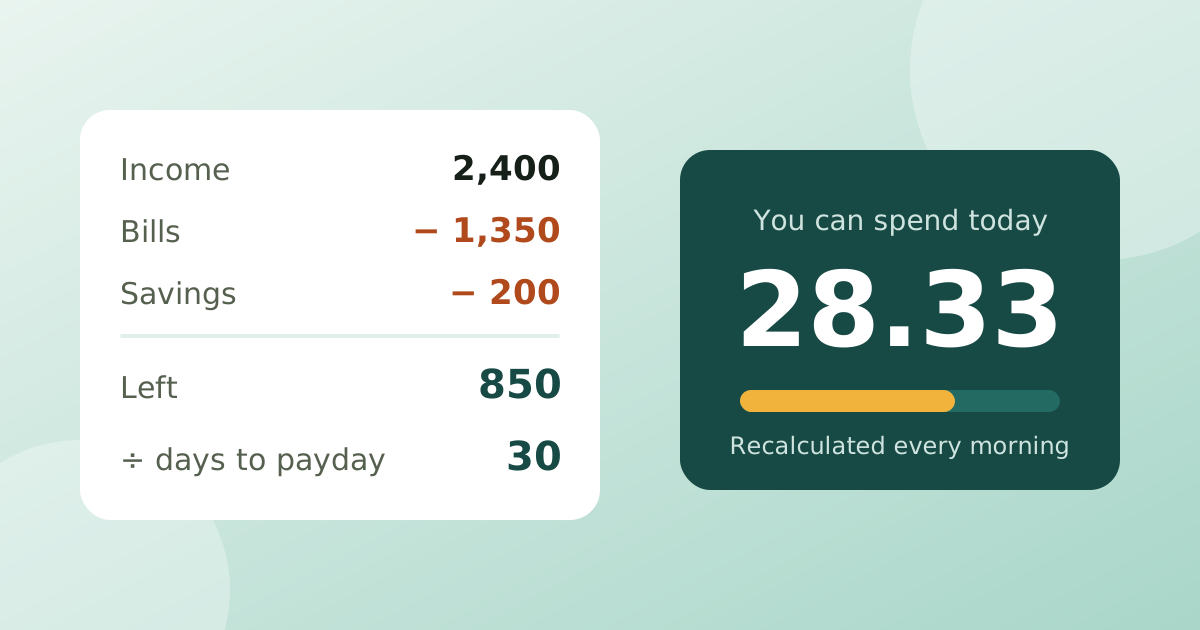
A daily budget is what is left after bills and savings, divided by the days until payday. One number you can act on at the checkout, recalculated each morning.
Read article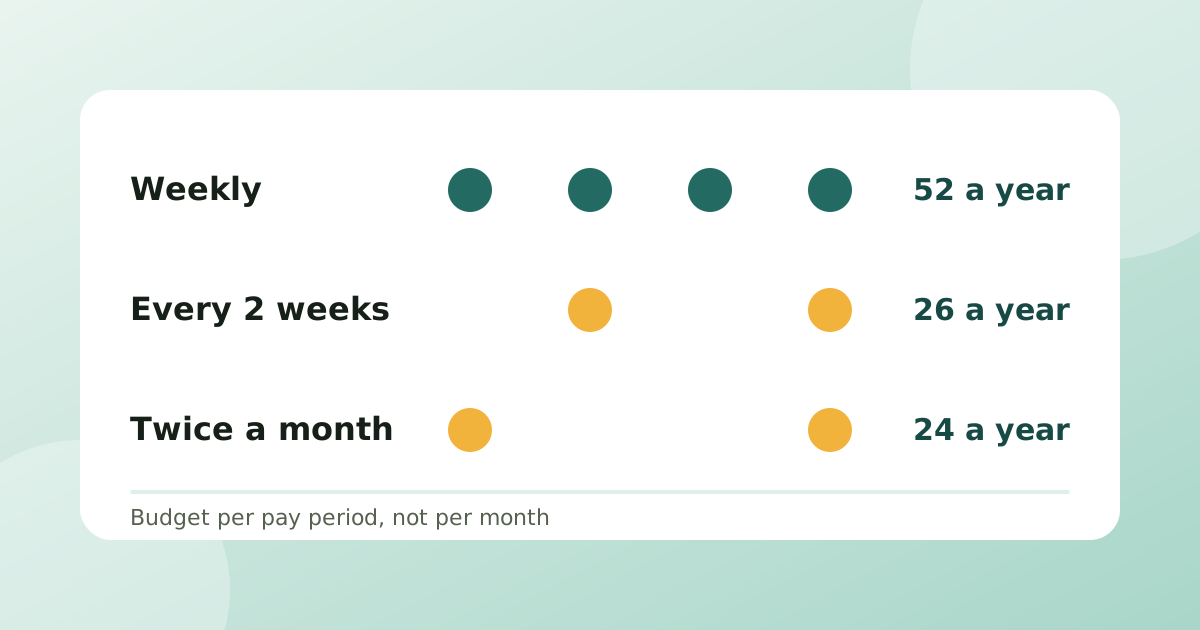
If you are paid weekly, every two weeks or twice a month, budget per pay period, not per calendar month. List the bills that land before your next payday, set aside savings, and divide what is left by the days until you are paid again. That gives a daily amount that matches the money you actually have, and it makes the odd extra paycheck a bonus instead of a surprise.
Most budgeting advice assumes one paycheck on the same date each month. Other pay schedules do not line up with that:
| Pay schedule | Paychecks a year | Typical month | Watch out for |
|---|---|---|---|
| Weekly | 52 | 4 or 5 | Five-payday months are normal, about four a year |
| Every two weeks | 26 | 2 or 3 | Two months a year have a third paycheck |
| Twice a month | 24 | 2 | Unequal gaps, for example 14 and 17 days |
| Monthly | 12 | 1 | None, but one pot has to last the whole month |
You are paid 1,100 every second Friday. This period has 14 days. A phone bill of 40 and a loan payment of 130 fall inside it, and you save 100.
| Step | Amount |
|---|---|
| Paycheck | 1,100 |
| Bills inside the period (40 + 130) | − 170 |
| Savings | − 100 |
| Left to spend | 830 |
| Divided by 14 days | 59.29 per day |
Rent and utilities are heavier in some periods than others, so your daily amount will change from one period to the next. That is normal. Each period gets the money it really has.
Two months a year, a biweekly schedule pays three times. The easiest rule is to treat the third paycheck as a bonus: do not include it in your normal spending. Use it for one of these:
The same works for five-payday months on a weekly schedule.
Daily Budget works with monthly, weekly, every-2-weeks and twice-a-month pay cycles. Enter your income and bills once, log what you spend, and the app shows how much you can spend today, carries unspent money forward and explains each step when you tap the number. There is no bank login, no ads and the data stays on your phone.
Want to try your own numbers first? The free daily budget calculator runs in your browser. For the basic method see how much can I spend per day, and find more guides in the money and budgeting section.
Budget per paycheck instead of per month. List the bills that fall before the next payday, set aside savings, and divide what is left by the days until you are paid again. In most months you get two paychecks, but twice a year you get three.
26, which is two more than the 24 you would get from a twice-a-month schedule. Twice a year a biweekly month contains three paydays.
No. A year has 52 weeks, so the average month has about 4.33 paydays. Multiplying a weekly wage by four understates your income by about a twelfth, and months with five paydays are a bonus, not a normal month.
Biweekly means every second week, 26 paychecks a year on the same weekday. Twice a month means two fixed dates, for example the 1st and 15th, 24 paychecks a year, so the amount of days between them varies.
A daily budget is what is left after bills and savings, divided by the days until payday. One number you can act on at the checkout, recalculated each morning.
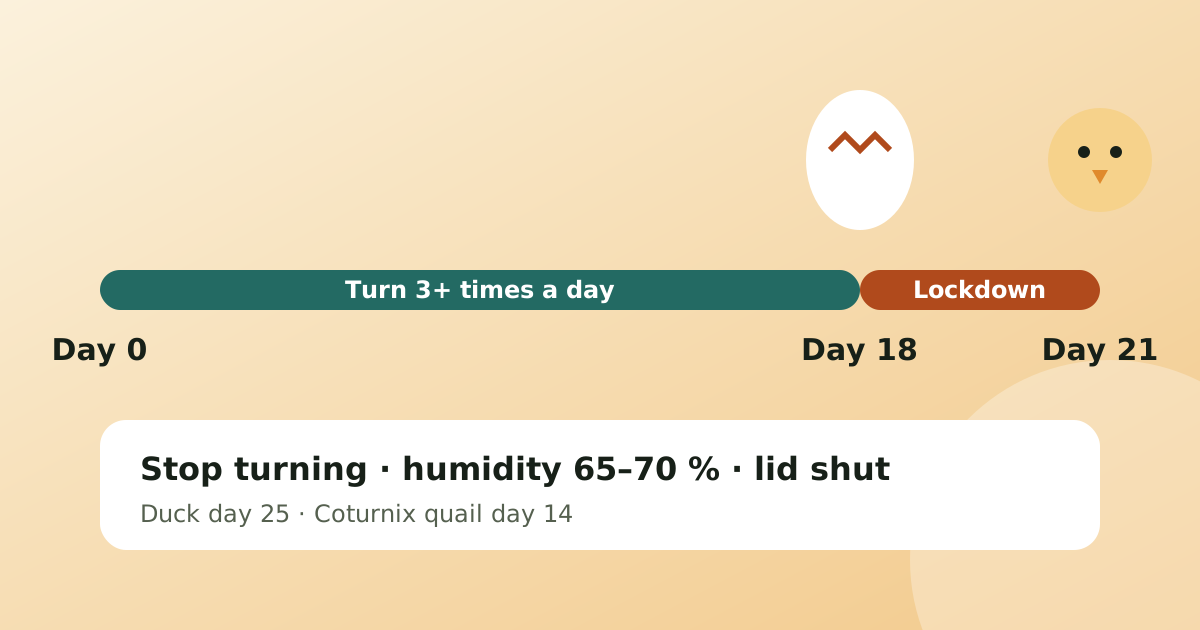
Read articleStop turning eggs three days before they are due: day 18 for chickens, day 25 for ducks, day 14 for Coturnix quail. Raise the humidity, keep the lid shut and wait.
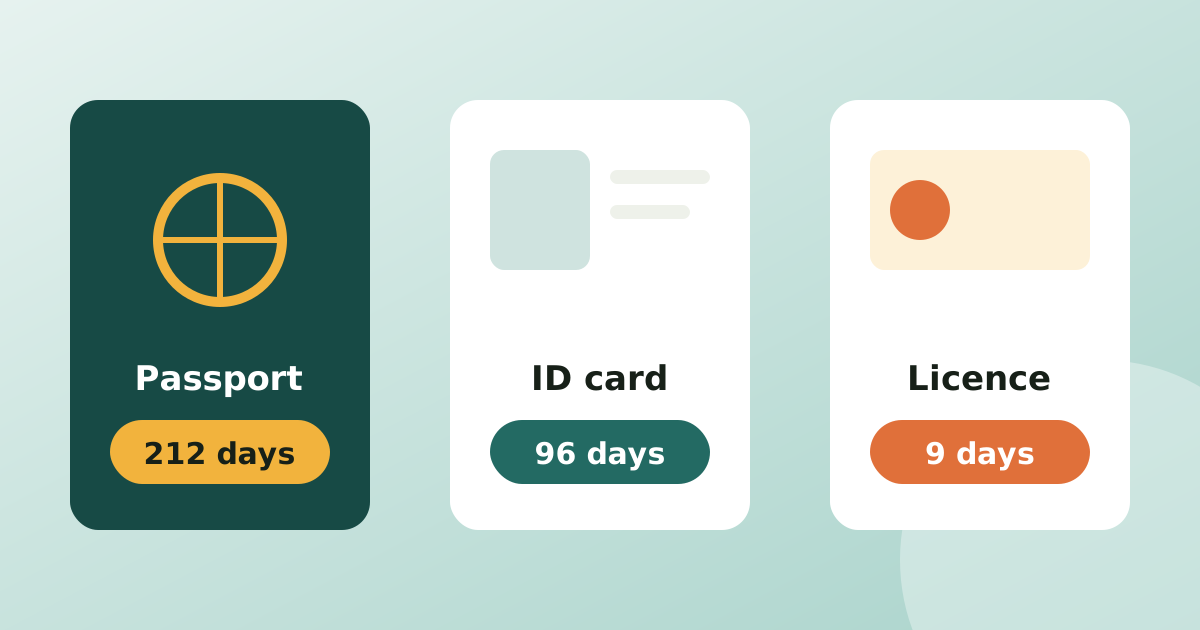
Read articleAn expired passport is not found out at home, it is found out at the airport. Here is when to renew each document and how to get a reminder long before it matters.
Read articlePublished: . More in Money & budgeting or all articles.