How much can I spend per day? Work out a daily budget in 5 steps
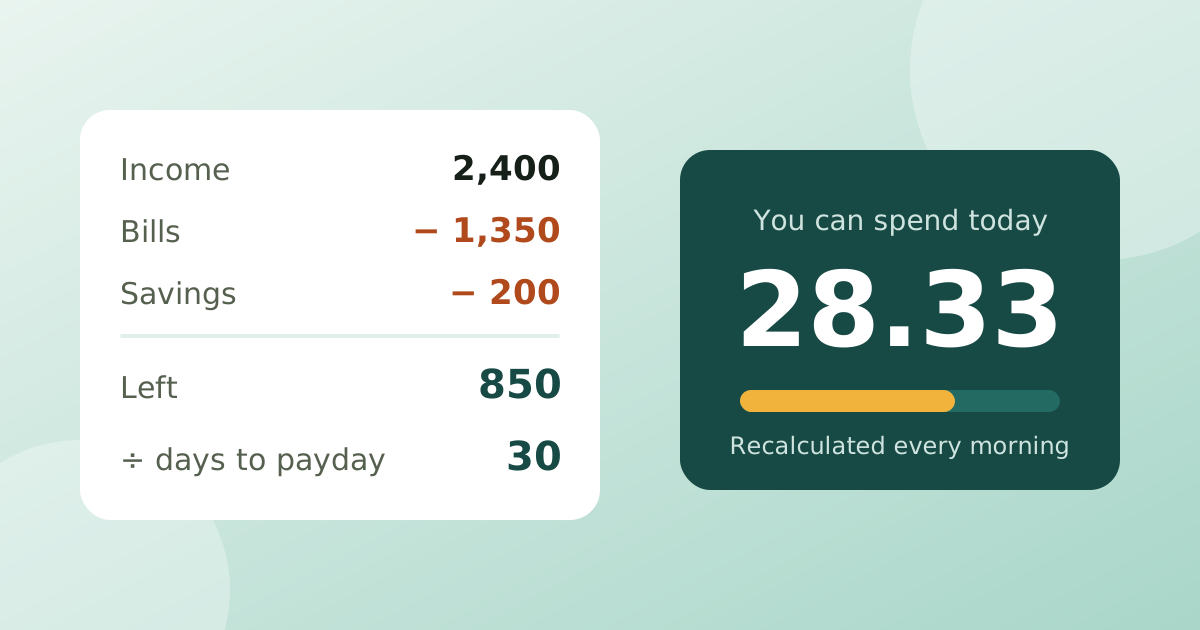
To find out how much you can spend per day, take your income for the pay period, subtract bills and savings, and divide what is left by the days until your next payday. The result is one number you can check at the till. Recalculate each morning with what you actually spent, and the number stays honest.
Why a daily budget works better than a monthly one
A monthly budget of 850 tells you little on day 12. "You can spend 28 today" tells you whether the coffee, the lunch out or the new shirt fits. A daily budget turns a vague plan into a small decision you can make in seconds, and it corrects itself: a cheap day raises tomorrow's number, an expensive day lowers it.
How to calculate a daily budget in 5 steps
Start with income for the period. Salary, benefits or any money you expect before the next payday. If you are paid weekly or every two weeks, use that period instead of the month.
Subtract bills and fixed costs. Rent, utilities, phone, insurance, loan payments and subscriptions.
Subtract savings. Pay yourself first, like a bill, so the daily number is money you can really spend.
Subtract what you have already spent this period on everyday things.
Divide by the days left until payday, counting today.
Worked example
Income for a 30-day pay period is 2,400. Bills are 1,350 and you set aside 200 in savings. That leaves 850 to spend.
Day
Left to spend
Days left
You can spend
Day 1 (morning)
850
30
28.33
Day 2 (after spending 40 on day 1)
810
29
27.93
Day 3 (after spending 15 on day 2)
795
28
28.39
Spending 40 on day 1 pushed the allowance down by 40 cents. Spending 15 on day 2 lifted it again. Small misses fade into the average, which is the point.
What to do when you overspend or have a big cost
Overspent today? Do nothing special. Tomorrow's number is smaller because the same money covers the same days minus one. If it feels too tight, look at what you can trim for a few days.
Big one-off expense? A 90 car repair would flatten a 28 allowance for three days. Either spread it across the rest of the period, or pay it from savings and keep the daily number unchanged.
Extra income? A refund or a bit of freelance work added to the period raises the number straight away.
Bills due before payday? They are already out of the pot in step 2, so you do not need to hold money back again.
Common mistakes
Leaving savings for "whatever is left", which is usually nothing.
Forgetting yearly or quarterly bills such as insurance. Divide them by 12 and include a share each month.
Counting tomorrow's days instead of today's. Include today in the day count or the number is too generous.
Giving up after one bad day. The method recovers on its own.
A daily budget app with no bank login
Daily Budget does the maths for you every morning. Add income and bills once, log what you spend, and the app shows your daily allowance, carries unspent money forward and explains every step when you tap the number. It supports monthly, weekly, every-2-weeks and twice-a-month pay cycles, lets you spread big expenses over several days, and keeps an under-budget streak. There is no bank connection, no ads and your data stays on your phone.
Take the money you have for the pay period, subtract bills, fixed costs and the savings you want to set aside, subtract what you have already spent, then divide by the number of days left until payday, today included.
What happens if I overspend one day?
Recalculate the next day. What is left is spread over fewer days, so your daily amount drops a little. If you spend less than the allowance, it rises.
Should savings come out before or after the daily budget?
Before. Treat savings like a bill so the daily number is money you can really spend.
How do I handle a big one-off expense?
Either spread it over several days or the rest of the pay period, or pay it from savings and leave your allowance alone. Do not let one purchase wipe out the allowance for days.
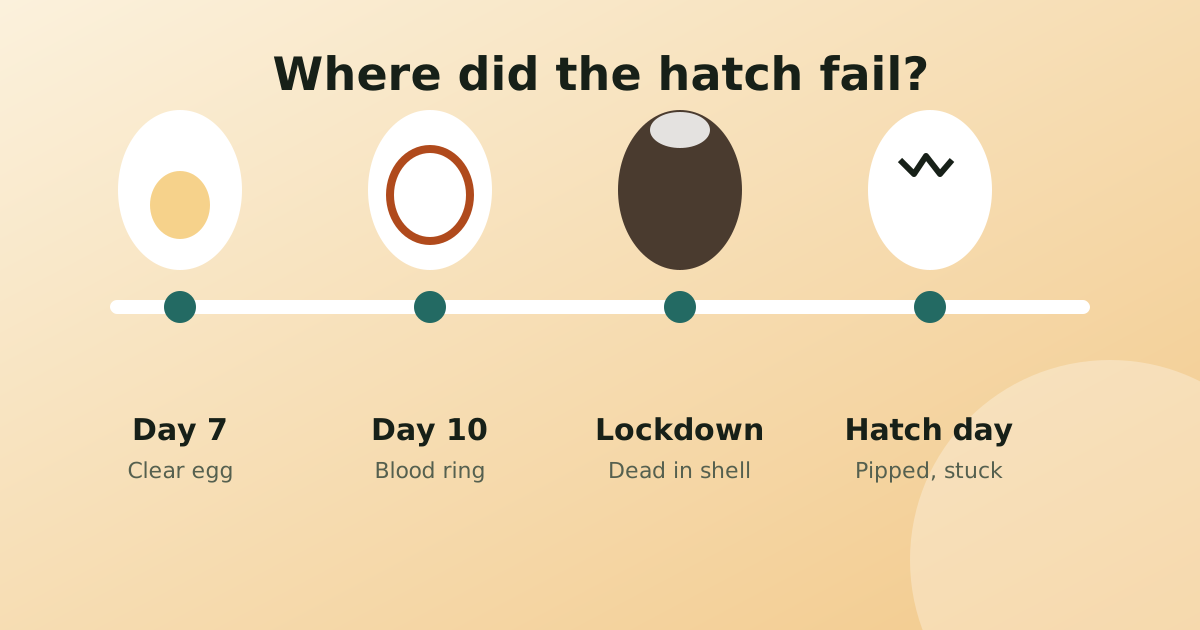
Work out why your eggs did not hatch by looking at when they failed: clear at day 7, dead at day 10, or fully formed but dead in the shell. Each stage points to different fixes.
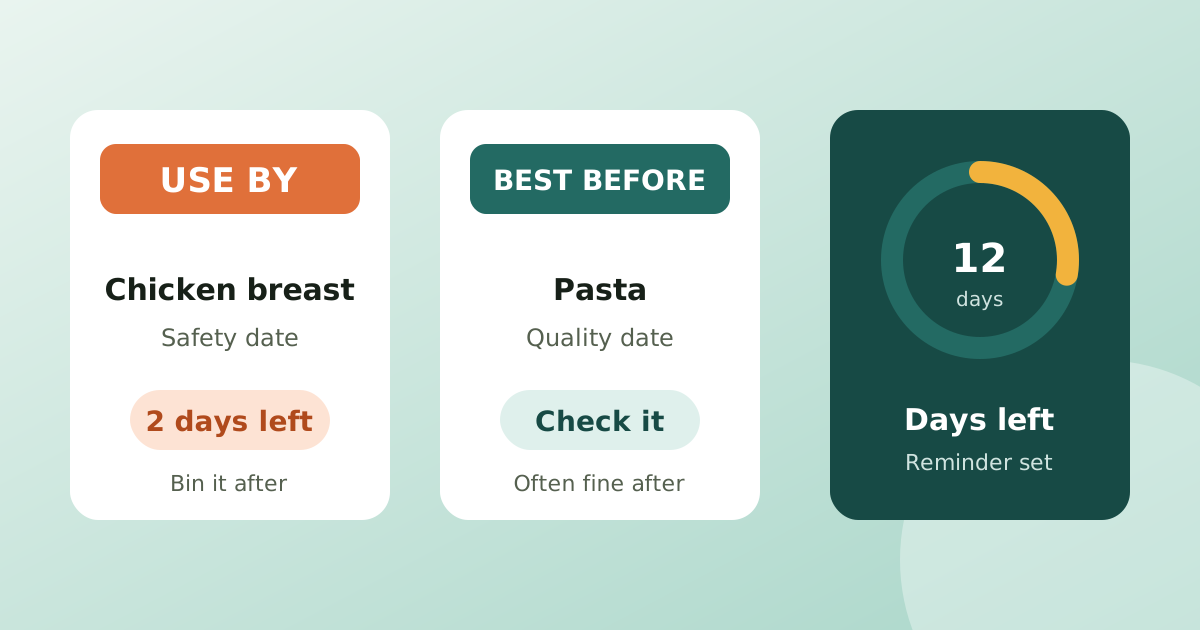
Use by is a safety date and best before is a quality date. Knowing which is which, and when a product is opened, saves food and money without taking risks.
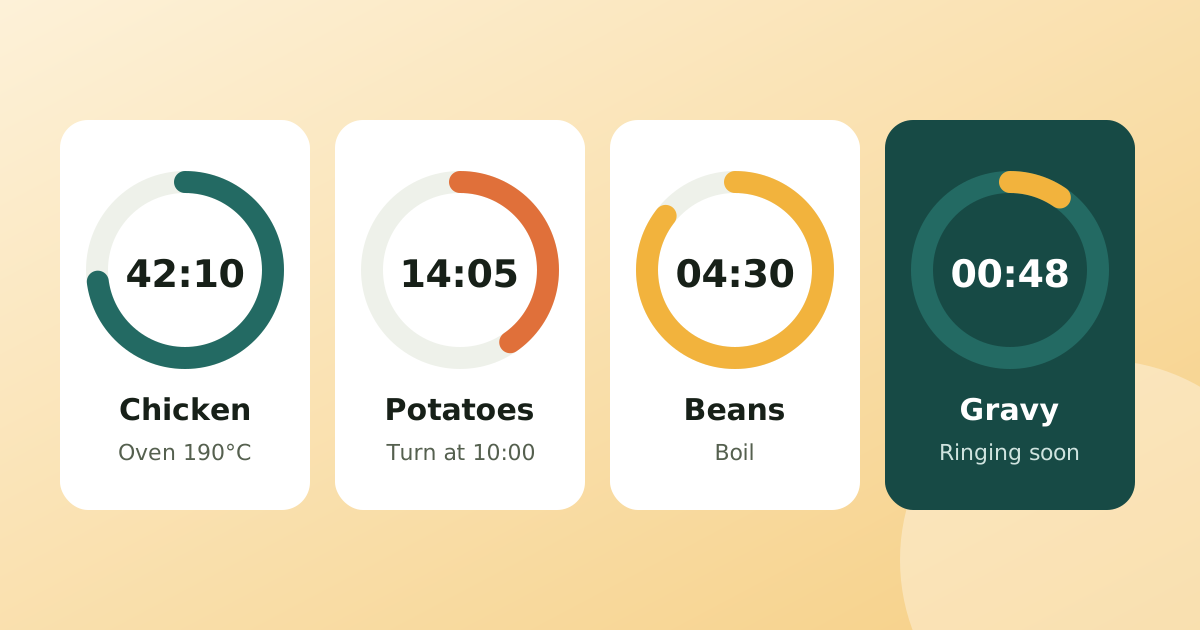
A roast, two sides and a sauce all finish at different times. Working backwards from serving time and giving each step its own timer keeps everything hot together.