How to prepare for an endometriosis doctor appointment
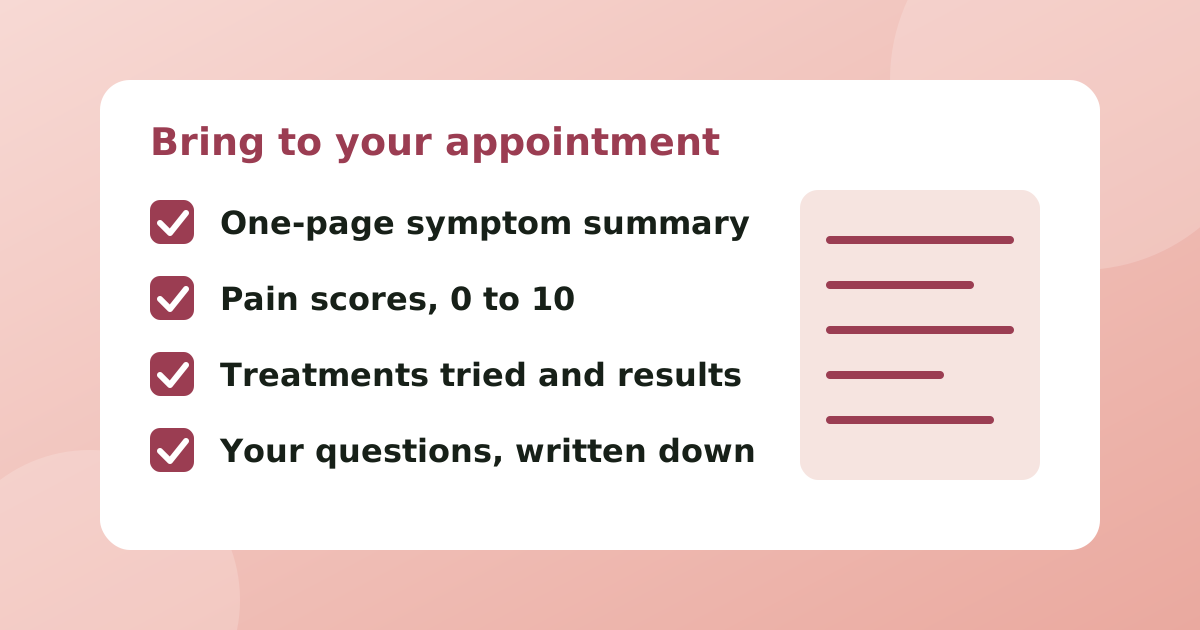
Appointments are short and symptoms are hard to remember on demand. A one-page summary and five questions make the time count.
Read article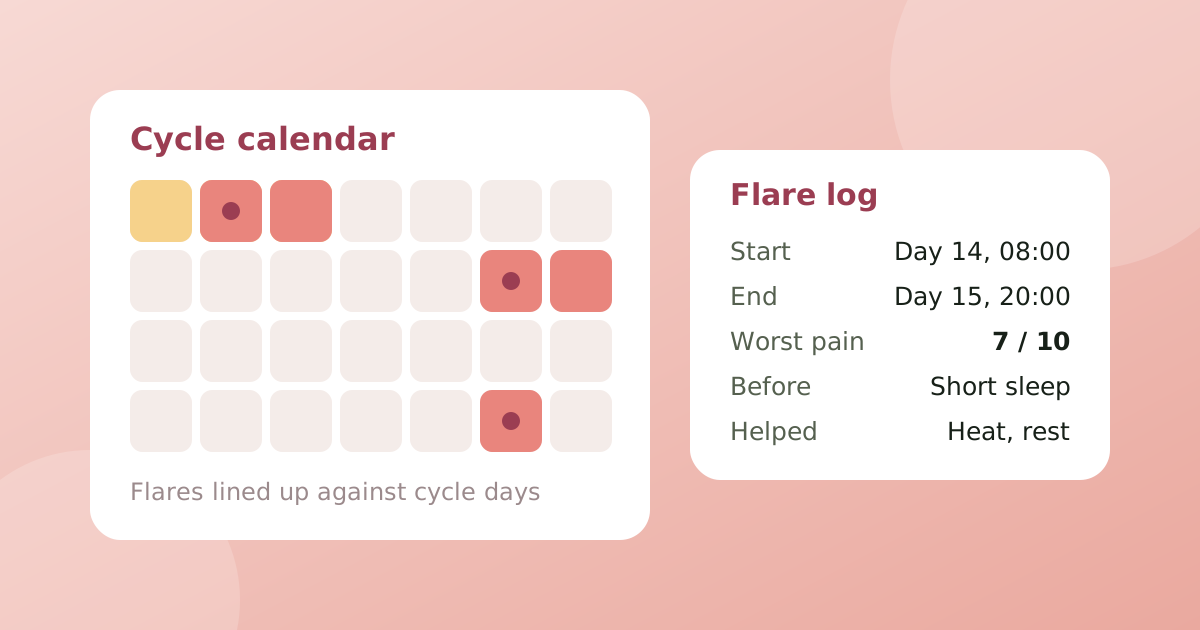
To understand your endometriosis flare-ups, log each one with its start, its end, the worst pain from 0 to 10, the day of your cycle, what was going on beforehand and what helped. Flares often feel random, but after two or three cycles of notes many people see a pattern, such as flares around ovulation, after bad sleep or after certain foods, which you can plan around and discuss with your doctor.
This article is general information, not medical advice. A flare log helps you describe what you experience; it cannot diagnose anything or replace care. Talk to your doctor about your symptoms and your treatment.
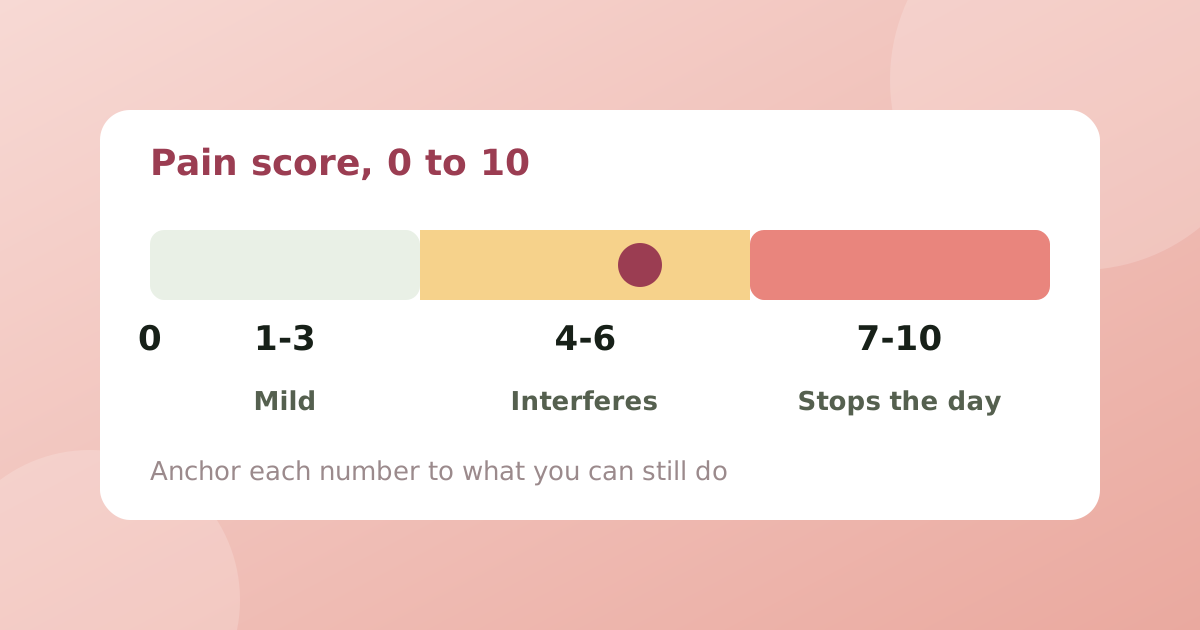
A flare is a spell that is clearly worse than your normal days: stronger pelvic or back pain, more bloating, fatigue, nausea, or bowel and bladder symptoms. Decide your own threshold, for example "pain of 6 or more, or a day I cannot do my normal plans", and use it every time. A fixed rule keeps the log consistent. The guide to rating endometriosis pain from 0 to 10 helps anchor the numbers.
| Field | Why it helps |
|---|---|
| Start and end | Shows how long your flares usually last and whether they are getting longer |
| Worst pain, 0 to 10 | One comparable number per flare |
| Cycle day | Shows whether flares cluster around your period or ovulation |
| Where and what kind | Pelvic, back, bowel, bladder, leg: different patterns lead to different questions |
| The 24 to 48 hours before | Sleep, stress, food and alcohol, exercise, sex, constipation, missed medication |
| What helped | Heat, rest, medicine and dose, a TENS unit, movement, and how much each one helped |
| Impact | Work or school missed, plans cancelled, nights of broken sleep |
On a bad day, write the start time and the pain number and nothing else. You can fill in the rest when the flare has eased.
People with endometriosis often name these, but the evidence for most of them is limited and everyone is different. Treat the list as things to check in your own log, not rules:
Avoid cutting out whole food groups on a hunch. If your log points to food, bring it to your doctor or a dietitian.
Do not wait for the log in these cases. Get urgent medical help for sudden severe pain that is new or different, fever, fainting, very heavy bleeding, vomiting that will not stop, or pain that your usual plan does not touch.
Endly is a private endometriosis and adenomyosis symptom tracker. Its flare log records the start, the end, the worst pain and what helped. Flares are shown on your cycle calendar beside daily pain scores, and the free version includes the flare log. You can turn your entries into a PDF for your doctor. There is no account, no ads and no analytics, and your entries stay on your phone.
More guides are in the health and symptom tracking section, including what to track in an endometriosis symptom diary and how to prepare for an endometriosis appointment.
A flare-up is a spell of symptoms that are clearly worse than your usual baseline, such as stronger pelvic pain, back pain, bloating, fatigue or bowel and bladder symptoms. It can last hours or several days and may or may not line up with your period.
Commonly reported triggers include the period and ovulation, stress, poor sleep, some foods or alcohol, constipation, intense exercise, sex, and missed or changed medication. Evidence for most of them is limited and they differ from person to person, so tracking your own pattern is more useful than a general list.
It varies a lot: from a few hours to a week or more. Logging the start and end of each flare tells you what is typical for you, which helps you plan and gives your doctor a concrete picture.
Get urgent medical help for sudden severe pain that is new or different, fever, fainting, very heavy bleeding, vomiting that will not stop, or pain that your usual plan does not touch. A flare log is not a reason to wait.
Appointments are short and symptoms are hard to remember on demand. A one-page summary and five questions make the time count.
Read articleA pain score is only useful if a 6 today means the same as a 6 last month. Here is how to anchor each number to what you can and cannot do.
Read articleAppointments are short and memory is unreliable when you are in pain. A good symptom diary fixes both, if it records the right things.
Read articlePublished: . More in Health & symptom tracking or all articles.