Endometriosis flare-ups: how to track triggers and what helped
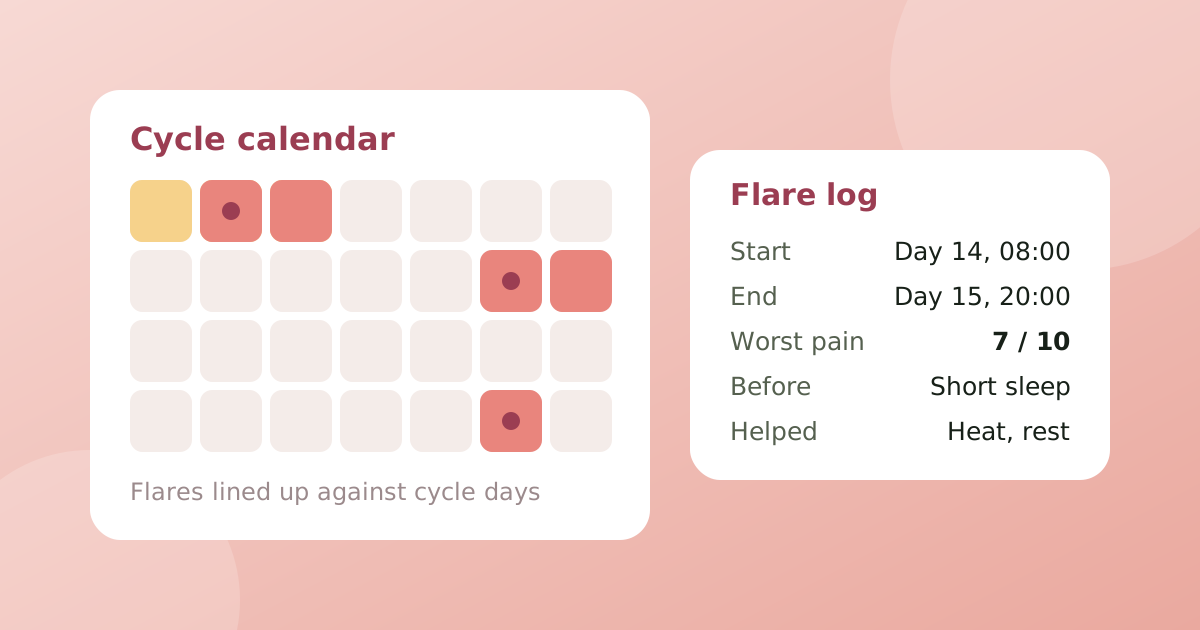
Flares feel random until you write them down. Log the start, the end, the worst pain, the cycle day and what helped, and after two or three cycles a pattern often shows.
Read article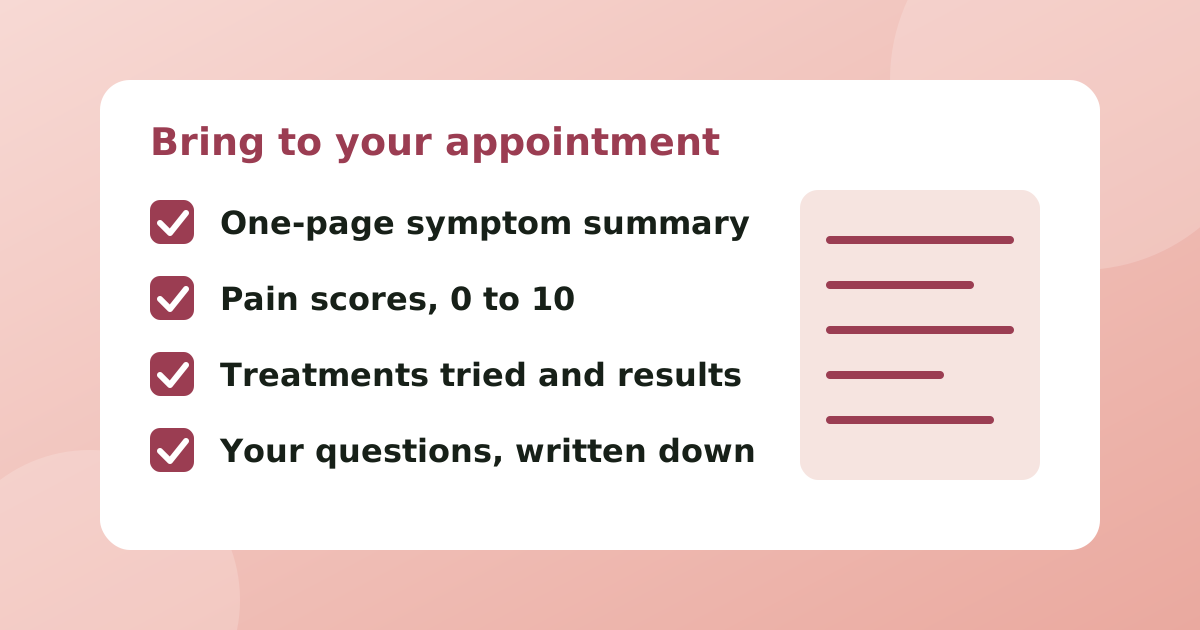
To prepare for an endometriosis appointment, bring a one-page summary of the last two to three months: your pain scores, where and when it hurts, your period dates, what you have tried and what it stopped you doing, plus a short list of questions. Appointments are brief and pain is hard to describe on demand, so records you made at the time are more reliable than memory and let the doctor see the pattern quickly.
This article is general information, not medical advice. A symptom diary helps you describe what you experience; it cannot diagnose anything. Talk to your doctor about your symptoms and the right care for you.
You may have ten to twenty minutes, and the questions you are asked, such as "how bad is the pain?", are exactly the ones that are hard to answer from memory. A good day on the day of the appointment can make you play it down. Notes taken as it happened keep the picture honest and save time for the part that matters: deciding what to do next.
| Bring | Why it helps |
|---|---|
| Pain scores, 0 to 10 | Shows how often and how severe, and whether it is changing |
| Where and what kind | Pelvic, back, bowel, bladder, during sex: each points the doctor to different questions |
| Period dates and flow | Shows how pain lines up with your cycle |
| Other symptoms | Fatigue, bloating, nausea and bowel or bladder changes are often part of the picture |
| What it stopped you doing | Days off work, cancelled plans, sleep lost: this describes severity better than a number |
| Treatments tried | Medicine, dose, dates and whether it helped, so nothing is repeated by accident |
| Your questions | Written down, so you do not forget them under pressure |
If you have not been tracking, the guide to what to put in an endometriosis symptom diary lists what is worth recording, and how to rate pain on a 0 to 10 scale shows how to keep the numbers comparable.
A doctor cannot read ninety daily entries in a few minutes, so reduce them to a few lines you can say or hand over:
Write down what was said while you remember it, including any new medicine and the date you agreed to review it. Keep tracking: the same diary shows whether a change is helping, and it is the evidence for the next visit.
Endly is a private endometriosis and adenomyosis symptom tracker. It lets you log a 0 to 10 pain score in about ten seconds, mark where it hurts on a body map, rate the five endometriosis pains and turn your entries into a PDF for your doctor. There is no account, no ads and no analytics, and your entries stay on your phone. More guides are in our health and symptom tracking section.
A one-page summary of your symptoms over the last two to three months, your pain scores, the dates of your periods, a list of medicines and treatments you have tried and how they worked, and your questions. A printed or on-phone symptom diary covers most of this.
Ask what the next step is and why, what the options are and their trade-offs, what tests or scans could help, how long to try a treatment before reviewing it, and which symptoms mean you should get help sooner.
Two to three months of tracking, covering at least two full cycles, is ideal. If your appointment is sooner, start today: even two weeks of daily pain scores gives your doctor more than memory alone.
Stay calm, show your records, and ask what you should do if the symptoms continue. You can ask for your concerns to be written in your notes, ask for a referral, or seek a second opinion. Records make the pattern harder to overlook.
Flares feel random until you write them down. Log the start, the end, the worst pain, the cycle day and what helped, and after two or three cycles a pattern often shows.
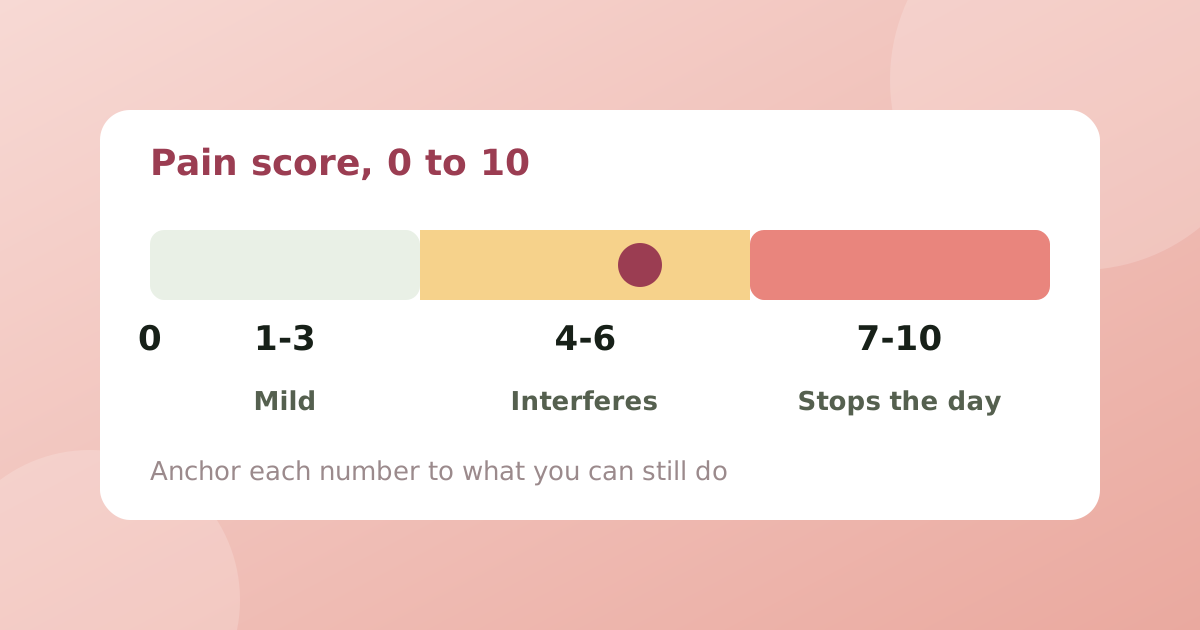
Read articleA pain score is only useful if a 6 today means the same as a 6 last month. Here is how to anchor each number to what you can and cannot do.
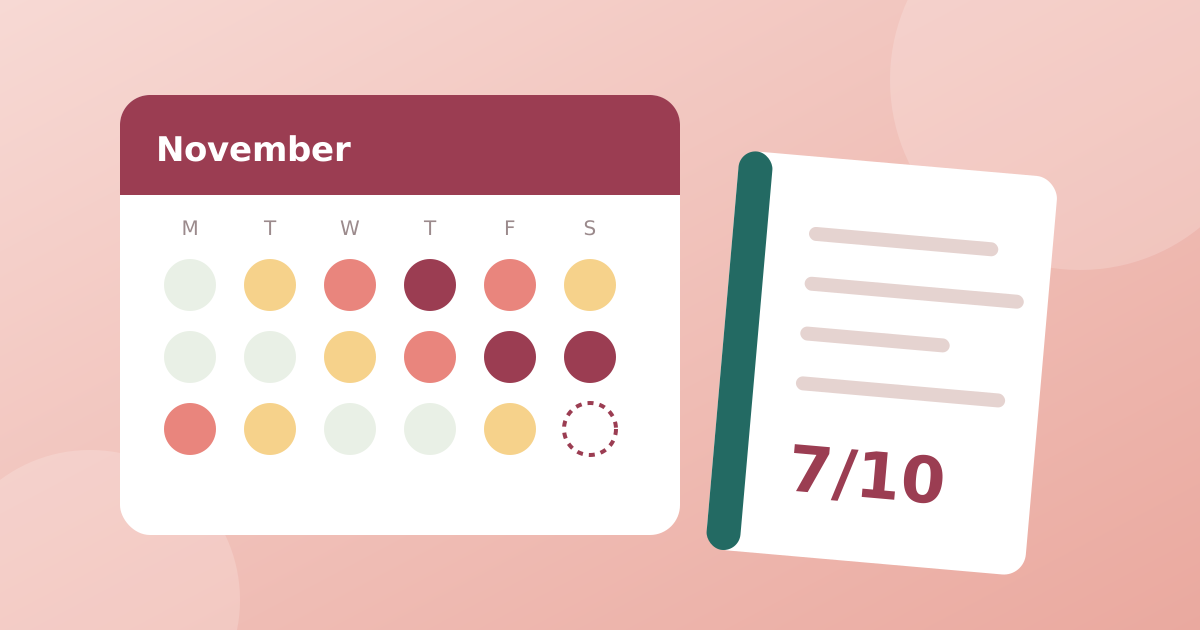
Read articleAppointments are short and memory is unreliable when you are in pain. A good symptom diary fixes both, if it records the right things.
Read articlePublished: . More in Health & symptom tracking or all articles.