Pip to hatch: how long it takes and when to help a chick hatch
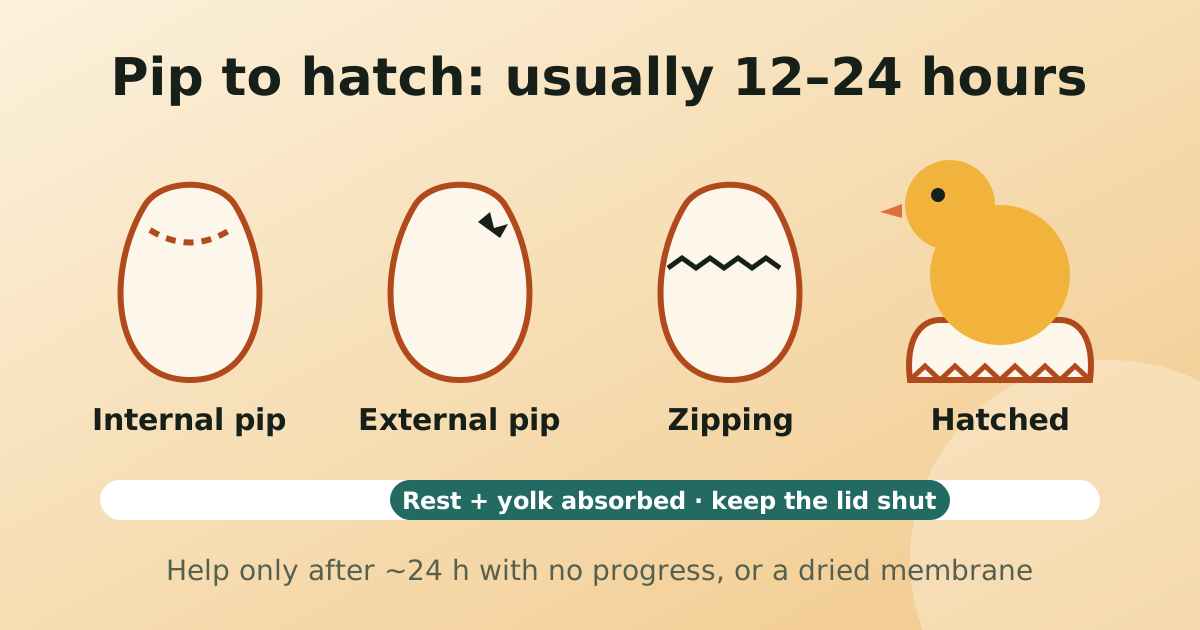
Most chicken chicks hatch 12 to 24 hours after the first external pip, the small crack or hole in the shell. In that time the chick may appear to do nothing for hours, because it is resting and absorbing the last of the yolk. That pause is normal. Keep the incubator closed and the humidity high, and help only if there has been no progress for about 24 hours or the membrane has clearly dried around the chick.
The stages from pip to hatch
Internal pip. The chick breaks into the air cell at the blunt end and starts breathing air. You may hear cheeping from the egg or see the egg rock slightly. If you candle it at this stage, the air cell edge looks dipped or shadowed.
External pip. The chick breaks a small hole or star-shaped crack in the shell with its egg tooth. This is the start of the clock.
Rest. For several hours the chick finishes absorbing the yolk and lets the blood vessels in the membrane close down. The pip hole may not change at all.
Zipping. The chick turns inside the shell and chips a line around the blunt end. Once zipping starts, it usually takes 30 minutes to a few hours.
Hatch. The chick pushes the cap off and kicks free, wet and tired. It dries and fluffs up over the next few hours.
How long is normal for each species?
Bird
Typical incubation
External pip to hatch
Chicken
21 days
12 to 24 hours, sometimes longer
Coturnix quail
17 to 18 days
Often a few hours to about 12 hours
Duck
28 days
Often 24 hours or more, with a long rest after pipping
Muscovy duck
35 days
Often 24 to 48 hours
Goose
28 to 35 days
Often 24 to 48 hours
Turkey
28 days
About 24 hours
These are typical times, not rules. Older stored eggs, cool spots in the incubator and big clutches all stretch the hatch. The whole hatch window for a chicken batch is often 24 to 36 hours from the first chick to the last. The incubation chart lists days, temperature and humidity for 11 species, and the hatch date calculator gives you the lockdown and hatch dates for your eggs.
Keep the incubator closed
The single most common way to lose a pipped chick is opening the incubator. Every time the lid opens, humidity falls, and the membrane around a pipped chick can dry and harden within minutes. That is what keepers call shrink-wrapped: the chick is stuck to a tough, papery membrane and cannot turn to zip.
Keep lockdown humidity up, typically around 65 to 75% for chickens. See the incubator humidity guide for each stage.
Leave hatched chicks inside. They live on the absorbed yolk and are fine in the incubator for up to 24 hours, and often longer, while the rest hatch.
If you must open it, choose a gap when no egg is actively zipping, work fast and close the lid.
When to consider helping
Most chicks that pip hatch without help, and an early rescue does more harm than good. Helping can tear blood vessels that are still active, or pull out a chick before it has drawn in the yolk. Consider helping only if:
it has been about 24 hours since the external pip (longer for ducks and geese) and nothing has changed,
the membrane at the pip hole has turned dry, white and leathery and the chick seems glued to it, or
the chick has zipped partly round but stopped for many hours.
A chick that is still cheeping and moving the pip hole is working, so leave it alone.
How to help a chick safely
Wash and warm your hands, and have a damp warm cloth or cotton bud ready.
Remove only a little shell around the pip hole, a small piece at a time, keeping away from the chick's beak and body.
Moisten the membrane with warm water so it softens and turns see-through again.
Stop at any blood. If a vessel bleeds, the chick is not ready. Put the egg back and check again after a few hours.
Let the chick finish. The aim is to free the head and stop it drying out, not to pull it out. Return the egg to the incubator and let it push the rest of the way.
Check the navel once it hatches. A small dry scab is normal. An open navel or unabsorbed yolk needs a clean, warm, quiet place and close watching.
Helping is a judgement call and does not always work, because some chicks that cannot hatch have other problems. If a whole batch struggles, look at the causes in why eggs do not hatch.
Plan the hatch so you know when to watch
Knowing the exact lockdown and hatch day means you stop turning at the right time and can be home when the eggs pip. Hatch Day counts down to hatch day for 11 species, shows daily temperature and humidity targets and reminds you about turning, candling, lockdown and the hatch. It is free on Android and iPhone and works offline. Read when to stop turning eggs for the days before the hatch, the candling guide for the weeks before, and the egg incubation section for more guides.
Frequently asked questions
How long after pipping does a chick hatch?
Most chicken chicks hatch 12 to 24 hours after the first external pip, and some take a little longer. Ducks and geese often rest for 24 hours or more after pipping, and quail are usually quicker.
Should I help a chick out of the shell?
Usually not. Most chicks that pip hatch on their own, and helping too early can tear blood vessels or pull out a chick whose yolk is not yet absorbed. Consider it only after about 24 hours with no progress since the external pip, or if the membrane has dried and is clearly trapping the chick.
What does shrink-wrapped mean?
The membrane inside the shell has dried out and stuck to the chick, so it cannot turn to zip around the shell. It is usually caused by low humidity or opening the incubator during the hatch.
Can I open the incubator during the hatch?
Avoid it. Each opening drops the humidity, and pipped eggs can dry out and shrink-wrap. Leave hatched chicks inside until they are fluffy, or until a gap in the hatch, then open quickly.
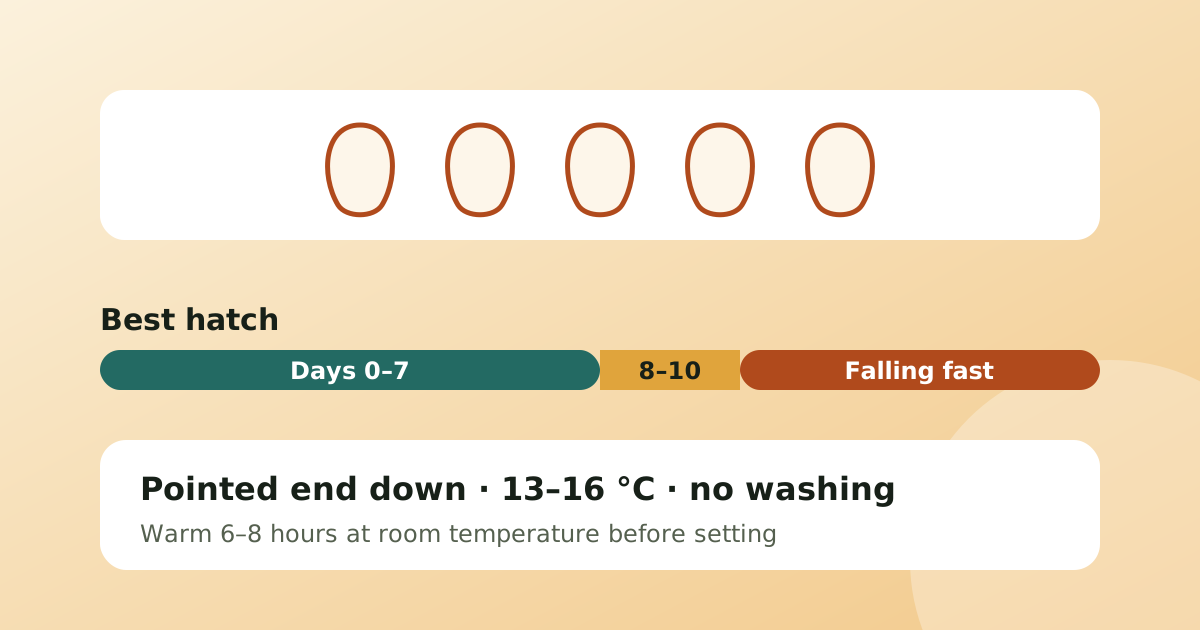
Set hatching eggs within 7 days of laying. Keep them pointed end down at 13 to 16 °C (55 to 60 °F), turn them once a day after the first few days and let them warm up before they go in.
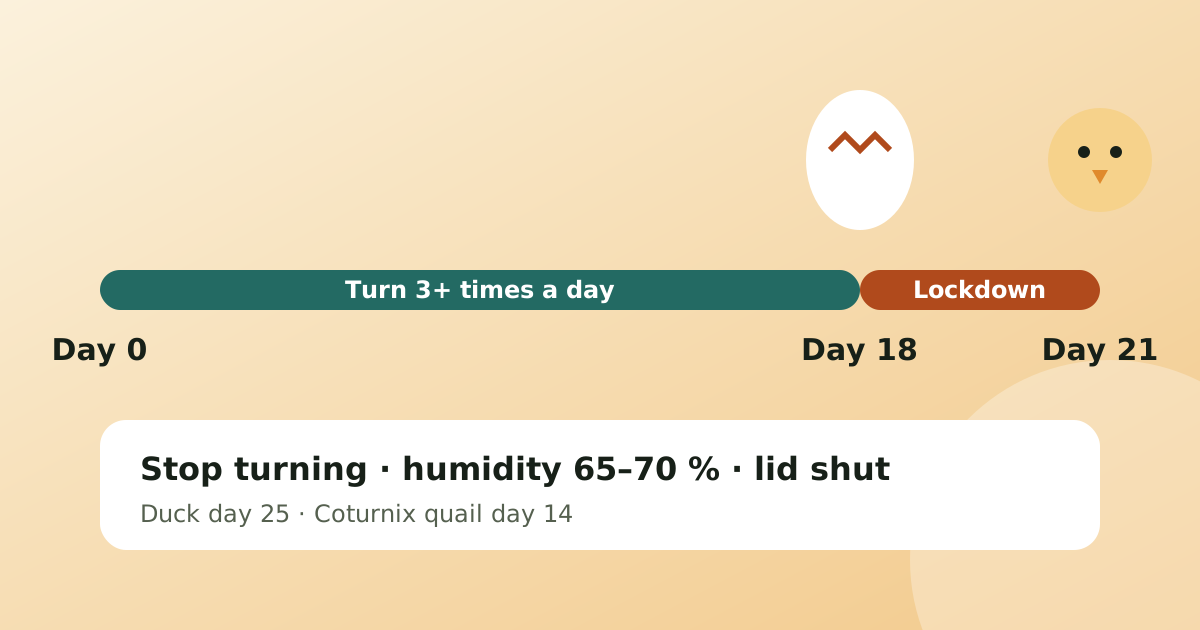
Stop turning eggs three days before they are due: day 18 for chickens, day 25 for ducks, day 14 for Coturnix quail. Raise the humidity, keep the lid shut and wait.
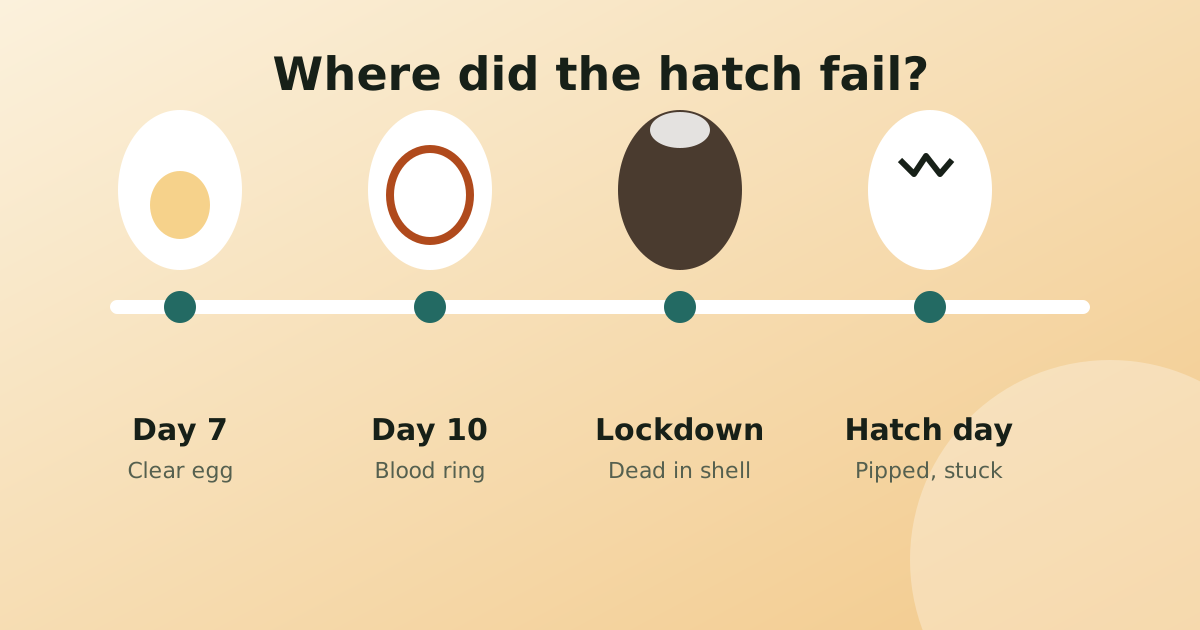
Work out why your eggs did not hatch by looking at when they failed: clear at day 7, dead at day 10, or fully formed but dead in the shell. Each stage points to different fixes.