The 50/30/20 budget rule explained, and how to turn it into a daily number
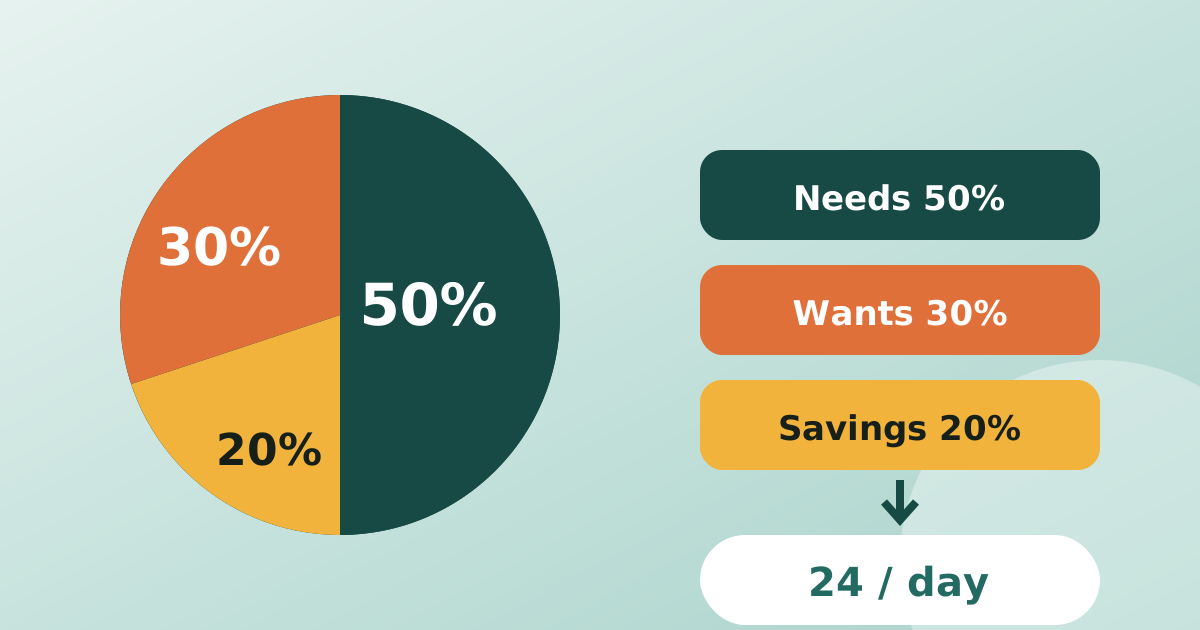
50/30/20 gives you three buckets: needs, wants and savings. It does not tell you what to do on a Tuesday. Here is how to turn the wants share into a daily limit.
Read article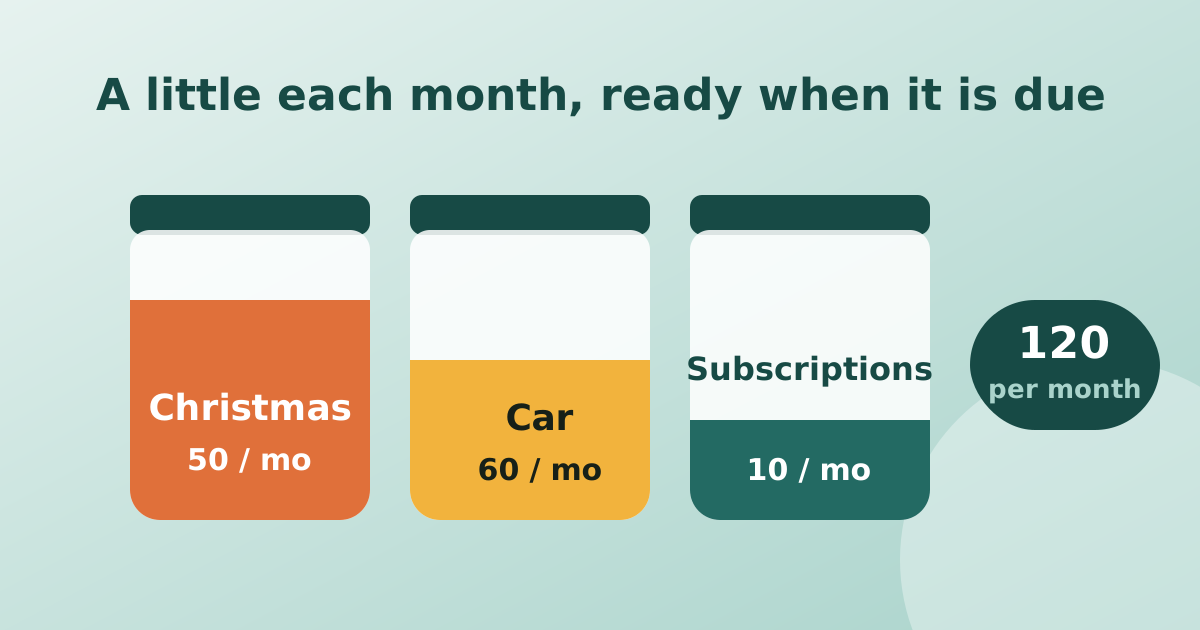
A sinking fund is money you put aside every month for a cost you know is coming, such as Christmas, car insurance or a yearly subscription. Divide the expected cost by the months until it is due, set that amount aside each payday, and the bill stops being a shock. Below you will find a list of common irregular expenses, a worked example, what to do if you start late and how sinking funds fit into a daily budget.
Most budgets plan for rent, bills and groceries, the costs that come every month. The money problems usually come from costs that arrive once or twice a year: the car service, the insurance renewal, birthdays, Christmas. None of them is a real surprise, but because they are not monthly they never make it into the plan. A sinking fund turns each of them into a small, predictable monthly amount.
| Expense | How often | Tip |
|---|---|---|
| Christmas and holiday gifts | Yearly | Include food, travel and decorations, not just presents |
| Birthdays | Through the year | One fund for all of them, used as they come |
| Car insurance, tax and service | Yearly | Check last year's renewal letter for the amount |
| Home or contents insurance | Yearly | Paying yearly is often cheaper than monthly |
| Annual subscriptions | Yearly | Software, memberships, streaming plans billed once a year |
| Holidays and travel | Once or twice a year | Set a target, then divide by the months left |
| Medical, dental and glasses | Irregular | Use last year's total as a starting estimate |
| Pet costs | Irregular | Vaccinations, flea treatment, boarding |
Go through the last 12 months of bank statements and note every cost that did not come monthly. That list is your starting point.
| Fund | Cost | Months to go | Per month |
|---|---|---|---|
| Christmas | 600 | 12 | 50 |
| Car insurance | 480 | 12 | 40 |
| Car service | 240 | 12 | 20 |
| Subscriptions | 120 | 12 | 10 |
| Total | 1,440 | 120 |
If you are paid weekly or every two weeks, divide by the number of paydays instead of months. Our guide to budgeting on weekly, biweekly or twice-monthly pay shows how to convert amounts between pay cycles.
If Christmas is about six weeks away and you have saved nothing, the maths is less kind: 600 over 1.5 months is 400 a month. You have three options, and most people use a mix:
Avoid putting the gap on a credit card. If you do, add the repayment to your budget as a bill straight away.
A sinking fund is for costs you can predict, even if they are irregular. An emergency fund is for things you cannot predict, such as losing your job or a burst pipe. Keep the two apart, so Christmas never eats the money meant for a real emergency. One savings account can hold both if you track how much belongs to each.
A daily spending limit only works if it already accounts for the money you are setting aside. In Daily Budget, add your monthly sinking fund total as a bill, so the daily allowance is worked out from what is left after it. When the expense finally comes, mark it as paid from savings, and it does not take today's allowance. With Pro, savings goals let you track each fund separately. Daily Budget never asks for a bank login, has no ads and keeps your budget data on your phone.
New to daily budgeting? Start with how much can I spend per day, try the free daily budget calculator, or see how the 50/30/20 rule splits income into needs, wants and savings. More guides are in the money and budgeting category.
Money you set aside in small regular amounts for a specific cost you know is coming, such as Christmas presents, car insurance or a holiday. When the bill arrives, the money is already there.
Divide the expected cost by the number of months (or pay periods) until it is due. A 480 insurance renewal in 8 months needs 60 a month.
A sinking fund is for costs you can predict, even if they are irregular. An emergency fund is for things you cannot predict, such as job loss or a sudden large repair. Keep them separate so one does not drain the other.
No. One savings account is enough if you track how much belongs to each fund, in a note, a spreadsheet or a budget app.
50/30/20 gives you three buckets: needs, wants and savings. It does not tell you what to do on a Tuesday. Here is how to turn the wants share into a daily limit.
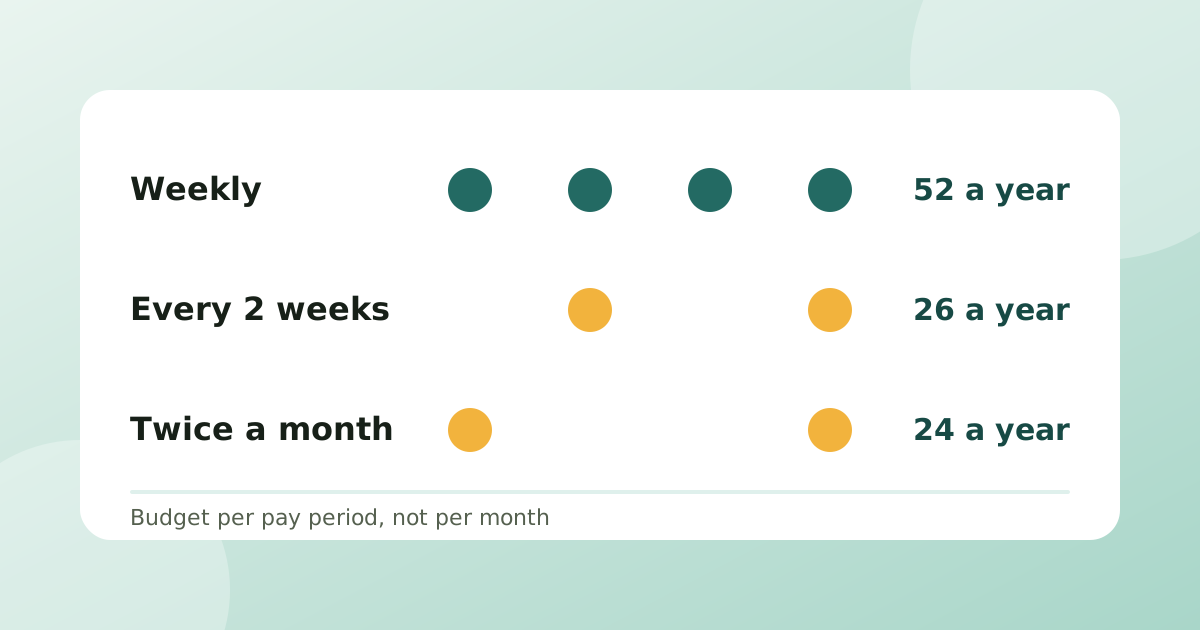
Read articleIf you are paid weekly, every two weeks or twice a month, a monthly budget does not fit your income. Budget per pay period instead, and treat the extra paychecks as a bonus.
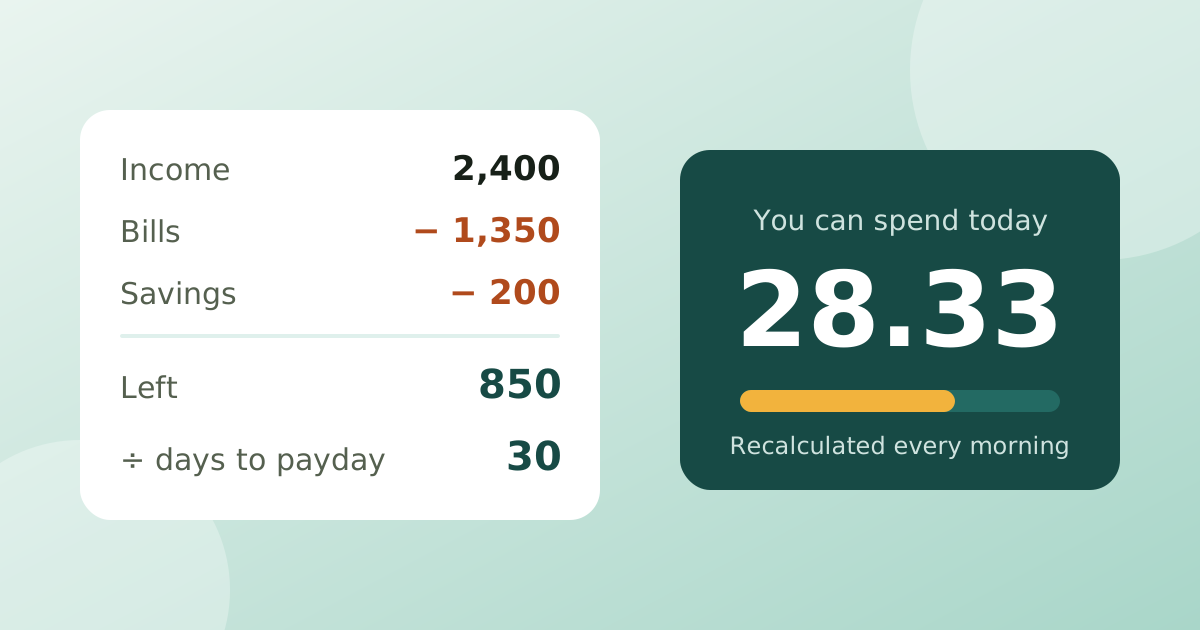
Read articleA daily budget is what is left after bills and savings, divided by the days until payday. One number you can act on at the checkout, recalculated each morning.
Read articlePublished: . More in Money & budgeting or all articles.