The 50/30/20 budget rule explained, and how to turn it into a daily number
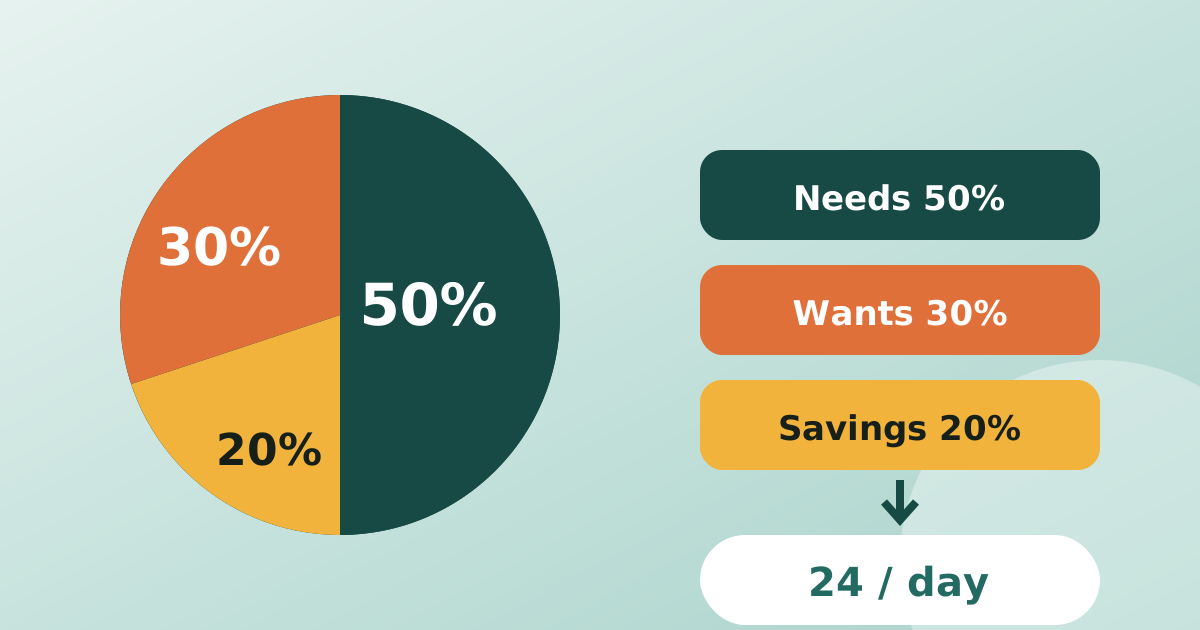
The 50/30/20 rule splits your after-tax income into 50% needs, 30% wants and 20% savings and debt repayment. It is simple, but it stops at the monthly level, so on any given day you still do not know whether you can afford lunch out. The fix is to divide the wants bucket by the days in your pay period. Below you will find a worked example, what to do when your needs cost too much and how to track the daily number.
What does 50/30/20 mean?
Bucket
Share of net income
What goes in it
Needs
50%
Rent or mortgage, utilities, groceries, transport, insurance, minimum debt payments
The rule was popularised by Elizabeth Warren and Amelia Warren Tyagi in the book All Your Worth. It uses net income, the money that reaches your account after tax. It is a guideline, not a law.
Worked example: 2,400 a month
Needs: 1,200. Rent, bills, groceries and transport must fit here.
Savings: 480. Move it on payday, before you can spend it.
Wants: 720. This is the money you can spend freely.
Daily wants limit: 24. 720 divided by 30 days.
If it is day 10 and you have spent 300 of the wants bucket, you have 420 left for 20 days, so your limit is now 21 a day. This is the same idea as in our guide on how much you can spend per day, with the buckets as the starting point.
When needs are more than 50%
Change the ratio. 60/20/20 or 60/25/15 are common in high-rent cities.
Cut wants first. Needs are fixed in the short term, so the wants bucket absorbs the difference.
Keep savings above zero. Even 5 to 10% builds a buffer and the habit.
Where the rule falls short
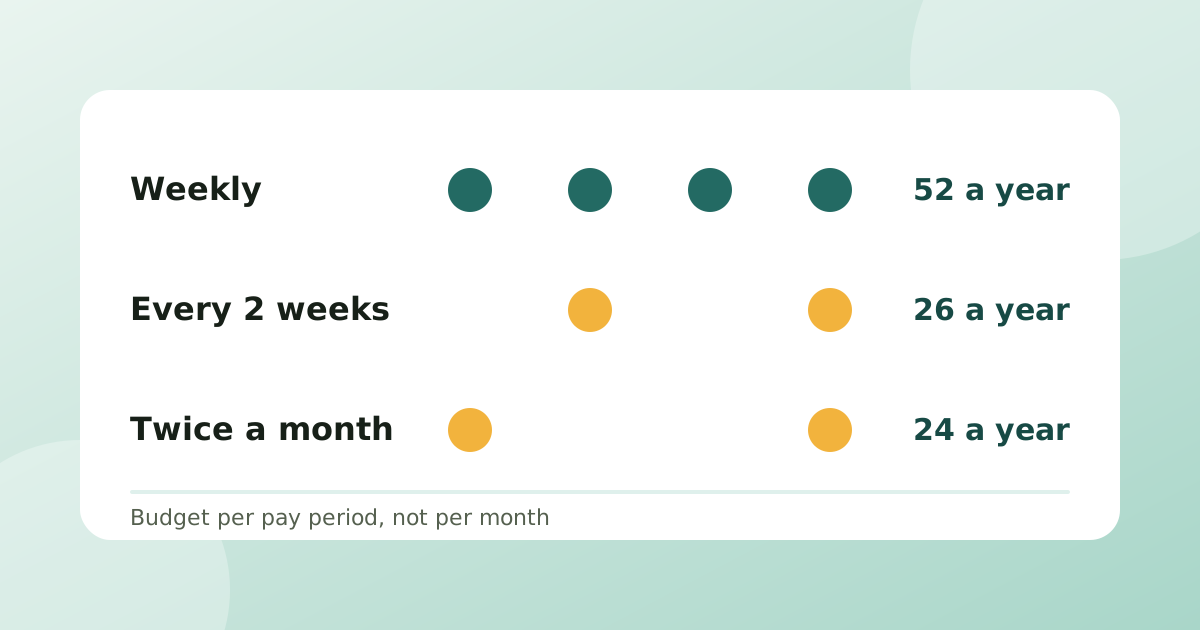
It does not handle uneven pay, weekly or fortnightly paydays or big one-off costs. If you are paid every week or twice a month, read how to budget with weekly, biweekly or twice-monthly pay, and apply the percentages per pay period instead of per month.
Track the daily number without a bank login
Daily Budget is a budget app that shows a daily allowance from your income, bills and savings. It carries unspent money forward, follows weekly, every-2-weeks, twice-a-month or monthly pay cycles and explains every step of today's number. It never asks for a bank login and has no ads, and your budget data stays on your phone. Enter your needs and savings as fixed amounts and the daily allowance is your wants limit. More guides are in the money and budgeting category.
Frequently asked questions
What is the 50/30/20 rule?
A budgeting guideline that puts 50 percent of after-tax income towards needs, 30 percent towards wants and 20 percent towards savings and debt repayment. It was popularised by Elizabeth Warren and Amelia Warren Tyagi.
Is the 50/30/20 rule based on gross or net income?
Net income, meaning what reaches your account after tax and payroll deductions.
What if my needs cost more than 50 percent?
That is common in expensive cities. Adjust the split, for example 60/20/20 or 60/25/15, and shrink wants first. The rule is a starting point, not a law.
How do I turn 30 percent for wants into a daily amount?
Divide the wants amount by the days in your pay period. For a 2,400 monthly net income, 30 percent is 720, or about 24 a day over 30 days.
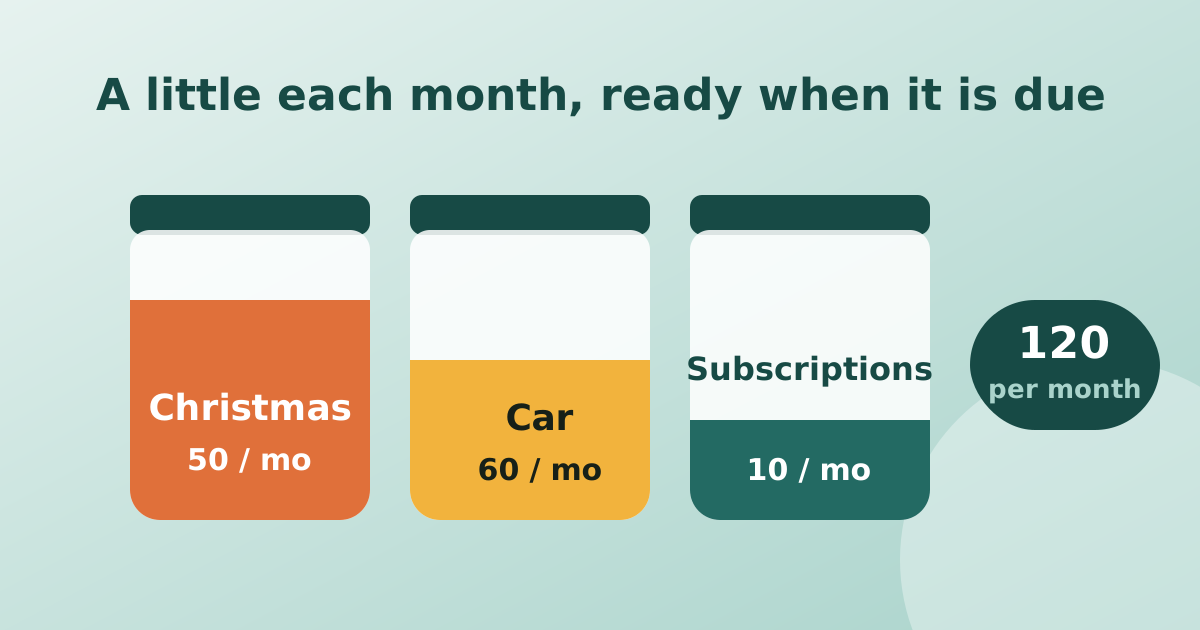
Christmas, car insurance and annual subscriptions are not surprises, they just do not arrive monthly. A sinking fund turns each of them into a small monthly bill.
If you are paid weekly, every two weeks or twice a month, a monthly budget does not fit your income. Budget per pay period instead, and treat the extra paychecks as a bonus.
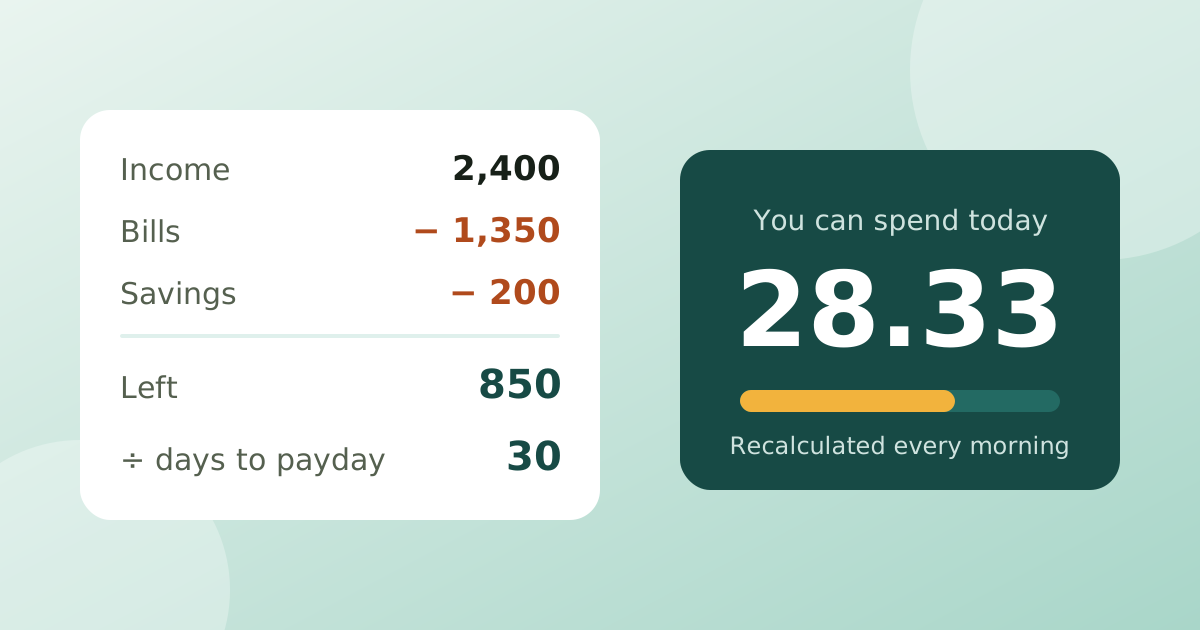
A daily budget is what is left after bills and savings, divided by the days until payday. One number you can act on at the checkout, recalculated each morning.